

As a long-standing SAP user, Alupress knows that the ERP system leaves hardly anything to be desired in terms of functionality, but in terms of clarity and handling of its user interfaces – keyword usability – there is generally still room for improvement with SAP. This was also the experience of the maintenance department of the South Tyrolean die-casting manufacturer, which used to work with SAP EAM (Enterprise Asset Management), formerly Plant Maintenance. Chargebacks, for example, were always a high effort: first create the chargeback slip on paper, then transfer the message 1:1 into SAP. This meant double work, cost time and was no longer sustainable for maintenance in the long run.
Since autumn 2015, Alupress has therefore been “refining” its SAP EAM module with OPRA (Optimized Proactive Lifecycle Approach), the SAP-based application for the maintenance of mobile and stationary systems and devices from DATAGROUP – a huge step in terms of usability, finds Stefano Sudaro, project manager for the topic of maintenance in the IT department of Alupress.
Before OPRA went live at Alupress, the solution had to undergo extensive evaluation and comparison with the competition. On the market, one mainly finds isolated solutions that are aimed at specific sectors and include interfaces to SAP. OPRA, with its sector-independent approach and 100% integration in EAM, occupies a special position among them.
Mass changes on different maintenance orders in the order cockpit, for example. There, the user can change fields collectively – “Change, click, enter, done!” Unlike in SAP, where this is only possible order by order. Since the beginning of September, the Tier 2 automotive supplier has been introducing the solution department by department, starting with surface finishing. The production areas are therefore only gradually changing over from the previous fault report by paper form to the electronic variant. According to the experience of the maintenance team at Alupress, it is advisable not to have all those involved in machine maintenance write their reports immediately via OPRA. Rather, it makes sense to introduce the employees slowly.
In future, if damage occurs to a machine, the production manager selects the machine in question from a list in the OPRA screen, attaches photos if necessary and then sends an error message via the system. This is received electronically by the head of maintenance, who converts it into an order and assigns it to the responsible colleague (in the case of electrical damage, to the electrician, etc.).
At Alupress’ four production sites – the parent plant in Brixen, two sites in Germany and one in the USA – a total of 30 colleagues are involved in maintenance.
While production is gradually switching over, they have been working with the system since OPRA was introduced – first with the desktop solution, and in future also with OPRAmobile on their smartphones. With the mobile solution, in future, when a maintenance order is processed on a machine, the maintenance technician can already scan the machine with the barcode in parallel.
On his smartphone, he then sees the other orders that are available for this system. “This is the ideal way to use downtime for further maintenance,” explains Stefano Sudaro. Above all, the maintenance technician can use OPRA mobile to report back to SAP the working time spent and the components installed, which are then immediately booked out of the warehouse. Until now, this feedback was done on paper and then manually transferred to the ERP system.
With OPRA, Alupress will in future be able to set up flawless Industry 4.0 scenarios in the area of maintenance. “This is a big issue for our management,” reports Benjamin Kaser. Sensors on the machine automatically send information to the central SAP system. When certain threshold values are exceeded, actions are triggered automatically: either the maintenance interval is adjusted, fault messages are generated or spare parts and consumables are ordered. Alupress wants to be ready in two to three years. For the South Tyrolean aluminium specialists, the path with OPRA clearly leads in the direction of Industry 4.0.
Alupress AG has been known as a die casting specialist since the 1965s.
Through the continuous development of the company and various acquisitions in recent years, the company is now active in the production, machining and assembly of complex aluminium die castings with locations in Brixen (I), Hildburghausen (D), Berlin (D) and Laurens (USA).
The foundation stone of FEINGUSS BLANK GmbH was laid in 1960 by Dipl. Ing. Wilhelm Blank in Riedlingen, where the company is now headquartered. Currently, after more than 60 years on the market, FEINGUSS BLANK has around 500 employees and successfully sells investment casting products, both steel and aluminium investment castings, worldwide. Classic customers of the family-owned company are active in the automotive, mechanical engineering, aerospace and medical technology sectors.
At the beginning of 2018, DATAGROUP was commissioned to bring transparency into the company’s planning and control processes, to enable paperless order processing and to greatly streamline communication and coordination processes. Furthermore, a restructuring and qualitative enrichment of the master data was commissioned as part of the project.
The technology, therefore, does not require any interfaces or middleware and thus enables a smooth interaction with other SAP modules such as PM, MM, FI/CO, HR, SD, etc.. Furthermore, OPRA allows the seamless integration of non-SAP systems; both optimise data transparency and integrity.
User- or role-specific as well as uniform interfaces also significantly increase efficiency and user-friendliness compared to standard SAP and avoid duplicate data entry. This sustainably saves resources and thus cash for FEINGUSS BLANK GmbH.
After initial scepticism among the maintenance staff, who previously worked with the standard SAP EAM (Enterprise Asset Management), formerly SAP PM (Plant Maintenance), Andreas Burgmaier, the project manager, now says: “The staff can no longer imagine their work without OPRAmobile. If you ask them, they only say “You can take the spanner from us but not OPRA any more”. The maintenance solution is therefore highly accepted, not only because of the more efficient design of work processes, but also because of the increasing digitalisation.
The entire project started with a 10-month so-called re-design phase, with the background of revising and redesigning the maintenance processes and redefining all master data and planning data of the plants. The re-design phase was followed by the 6-month implementation phase, during which OPRA was installed, key users were introduced to the new organisation, the processes and OPRA were trained and the employees were familiarised with working with mobile devices.
The implementation of OPRA at BLANK has enabled faster and paperless order processing and a reduction in administrative work. This is because until now, the maintenance department handled all processes on a printed working paper. Through the implementation, they now have the possibility to document their work assignments digitally on site.
DATAGROUP ensures greater efficiency in the area of communication processes at BLANK, which also results in shorter process times. It was also possible to reduce manual transmission errors. Due to the optimisation of the processes, less management intervention is necessary, which is why the management level can concentrate on controlling and optimisation tasks.
However, the introduction was also associated with some challenges:
“One challenge during the introduction was the non-existent area-wide availability of the WLAN and the master data management. The WLAN was continuously expanded for this purpose until complete coverage could be achieved. In addition, improvements were made to our master data management and thus the quality and quantity were continuously improved. The master data was also reworked in this process in order to be able to use it meaningfully in the process,” says Andreas Burgmaier, Head of Plant Planning.
The project had a conception phase of two to three months. A total of 20 maintenance staff and three team leaders were involved in the project, who processed over 10,000 tickets in ten months to realise the project. The implementation of OPRA and the associated gap filling subsequently took a total of six months. After an orientation and stabilisation phase, the foremen and supervisors in production can now also submit their maintenance requirements digitally.
New phases of the project are also in the starting blocks: The implementation of the new release and the entire roll-out of OPRA to production. The goal is to enable BLANK’s production to directly record its own messages in OPRA. In this way, the call, the phone call or the e-mail for the colleague from maintenance is taken care of. In future, this information will be embedded in processes. A valuable advantage of this project is also staff motivation. The personal responsibility of the maintenance staff has been strengthened and a higher level of identification has been achieved.
In 2018, Miele made the decision: In the future, mobile processes were to be established in maintenance. Most of the plants of the traditional German company use the SAP module EAM for maintenance. The associated processes are manually controlled and information runs on paper. The extensive search for a system that could meaningfully supplement SAP EAM with digital processes resulted in the decision for OPRA at the beginning of 2018. Since the beginning of 2019, the SAP-based application of DATAGROUP for the maintenance of mobile and stationary systems and devices has been available for all Miele plants. Via process-oriented user interfaces, the application provides comprehensive and context-related information at the touch of a button on any mobile device. OPRA is fully integrated into SAP and enhances the EAM module with a user-friendly process design
Oliver Braun from the “Smart Maintenance” department at Miele & Cie. KG has been working in the appliance manufacturing plant at the Gütersloh site for 33 years. “In a detailed comparison with competitor products, we particularly liked OPRA’s embedding in SAP without interfaces and the very coherent user guidance. The licence model in connection with SAP was also interesting. Overall, DATAGROUP offered the most economical alternative,” he explains the product decision.
DATAGROUP uses the Fiori Client SAP for its maintenance solution and thus picks up the concept of the new SAP user interfaces in its software – another plus point for Miele. Fiori runs on any browser, on the PC as well as on the tablet or smartphone. The maintenance software also accesses SAP directly, without interfaces or middleware in between.
The practical use of OPRA at Miele started at the German sites in Gütersloh, Bielefeld and Oelde; the international plants are to be added step by step in the short to medium term. The laundry care competence centre is located in Gütersloh. Dishwashers and hoovers are manufactured in Bielefeld, cookers and ovens in Oelde. In Gütersloh alone, some 5,250 people work for Miele. The production facilities in these plants are now maintained with OPRA, as is the technical building equipment. Using the OPRA apps on their mobile devices, the maintenance staff can filter out their jobs themselves and directly book back the working time spent.
This reduces the administrative workload enormously. In OPRA, operating instructions and all other documents for the relevant component are stored behind each order and can be displayed. “At the point of value creation, everyone has all the information they need,” says Oliver Braun. When inspecting a lift truck, for example, no one has to fill out a piece of paper with the master data, scan it and save it in SAP. The individual points of a checklist are ticked off directly on the mobile device, and at the end OPRA automatically generates an inspection report as a PDF and stores it in Miele’s document management system.
Cross Plant Services is a separate department with its own maintenance team. This team also works with the new solution in the entire range of possible applications: be it in the forklift workshop, for the maintenance of dock levellers, for safety checks of fire doors, repairs of sanitary facilities and much more. In the final stage of expansion, 400 mobile devices are to be distributed at Miele with the OPRA client, at all – also – foreign locations that currently work with SAP. Smaller plants without SAP will follow. In addition, Miele wants to integrate its production workers, who are traditionally involved in the maintenance process, via OPRA as well.
In the meantime, the software release 2.2.2 has been successfully introduced in close cooperation. Many individual wishes on the part of Miele have been incorporated into the upgrade to the new release.
Miele is the world’s leading supplier of premium domestic appliances for cooking, baking, steam cooking, refrigeration/freezing, coffee preparation, dishwashing, laundry and floorcare. In addition, there are dishwashers, washing machines and dryers for commercial use as well as cleaning, disinfection and sterilisation equipment for medical facilities and laboratories (Professional business area). Founded in 1899, the company has eight production sites in Germany, one plant each in Austria, the Czech Republic, China, Romania and Poland, as well as the two plants of the Italian medical technology subsidiary Steelco Group. Turnover in the 2020 financial year was around 4.5 billion euros (of which in Germany: 29.5 per cent). Miele is represented in almost 100 countries/regions by its own sales companies or via importers. Worldwide, the fourth-generation family-run group employs around 20,900 people, some 11,050 of them in Germany. The company is headquartered in Gütersloh, Westphalia.
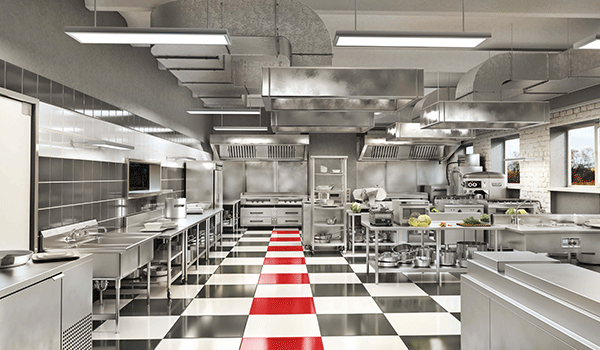
RATIONAL, one of the leading manufacturers of kitchen appliances for commercial kitchens, relies on the SAP-based maintenance solution OPRA from DATAGROUP. The mobile solution can be used directly where the maintenance staff needs it: On site in the factory. Intuitive interfaces and simple prioritisation of tasks allow RATIONAL to make maintenance more efficient.
The OPRA maintenance solution is based 100% on SAP technology and could therefore be easily integrated into the existing SAP system landscape at RATIONAL. It was important for the company that the solution could be used on a mobile basis, so that the maintenance staff, who spend a lot of time on the move around the plant, could be supported directly on site. OPRA meets this requirement with intuitive apps that make paper-based maintenance processes superfluous. The maintenance staff can view all the necessary information directly on site at the machine and provide feedback via the app. This also ensures that the latest information is always available in real time in RATIONAL’s systems, as manual transfer of the data is no longer required..
RATIONAL has a comprehensive priority concept. Three priorities can be selected in SAP as standard: High, Medium and Low. RATIONAL has individual, specific prioritisations. With the help of OPRA, all notifications in the system can be prioritised accordingly and transferred by the maintenance staff to the mobile devices. The maintenance staff can sort the list of their tasks by priority so they can see at a glance the tasks with the highest priority, group them and work through them accordingly.
For over 46 years, RATIONAL’s ambition has been to offer their customers the best tools for cooking. When they started out in 1973 with just 18 employees, no one suspected that this resolution would be the basis of a success story.
RATIONAL does not see itself purely as a machine manufacturer, but as an innovative solution provider. Their first and last thought is the satisfaction of their customers. This vision has made RATIONAL the global market and technology leader. Today, 140 million meals are prepared in RATIONAL appliances all over the world.
With more than 1,000,000 appliances on the market, their cooking systems have become the standard in professional kitchens around the world. The fact that they are on the right track is confirmed by 98% of their customers in the relevant markets of Germany, the UK and the USA in the Kantar TNS study 2018: they would recommend RATIONAL to others.

Mobile maintenance with OPRA facilitates machine maintenance at DANA Incorporated – successful GoLive in the plants in Györ (Hungary) and Neu-Ulm (Germany).
In the plants of the globally active automotive supplier DANA Incorporated, the production units are now increasingly networked via sensors. Predictive maintenance, as enabled by OPRA, is a key vehicle for achieving the goals of such Industry 4.0 scenarios. When DANA Hungary Gyártó Kft. based in Györ implemented the SAP module EAM (Enterprise Asset Management – formerly Plant Maintenance) one year after the general SAP introduction, the SAP-integrated solution OPRA for maintenance and service management from DATAGROUP was also introduced at the same time. Especially its mobile use proves to be an enormous advantage in the daily work of the maintenance staff. OPRA complements the SAP EAM system through user-friendliness, process orientation, seamless integration of third party systems and enables a functional and visual integration of facilities, people, processes, data and systems in SAP.
At the Hungarian plant, maintenance staff used to work with Excel lists and paper forms to record faults on their machines and carry out maintenance. In May, SAP EAM and the latest version of OPRA went live – four desktop applications for the employees in the back office, who can use them to create operational planning and reports with the most important key performance indicators, as well as the mobile version OPRAmobile with three apps for the approximately 15 maintenance staff outside working on the machines. DANA commissioned the Ulm based office of DATAGROUP with project management, conception, implementation and customer-specific further development. The implementation was completed within four months. After the plant in Györ, OPRA was also rolled out to the plant in Neu-Ulm and put into production.
The maintenance staff use the solution for complete machine maintenance, planning and to support set-up and tool exchange processes. They can enter confirmations, reserve or remove spare parts and view historical data on repairs or maintenance per technical system or machine in real time. The 100% integration in SAP enables a smooth data exchange with other SAP modules such as warehouse, purchasing, production or controlling. The maintenance department can also enable external staff to use OPRA in order to avoid additional work due to duplicate data entry and to keep the data quality at the highest level. With the current version of OPRAmobile, maintenance staff have a number of additional processes and tasks at their fingertips. In detail, they work with three new apps: Via “OPRAmobile Technical Master Data” they can query relevant master data or historical data on a technical object, view current orders and notifications with object reference, use relevant documents and videos or install and remove equipment. In “OPRAmobile notifications” new notifications are created and existing ones are available for processing. Finally, “OPRAmobile Orders” covers the complete process of mobile order processing and feedback.
Anja Scheibner-Weiss, Business Analyst in the IT Department of DANA Power Technologies at the Neu-Ulm site, was closely involved in the implementation in Hungary and Neu-Ulm. “The difference between the mobile app and the previous work in the pure SAP GUI is enormous,” she explains. “There are many more steps in the ERP system: You have to create a notification about a malfunction, turn it into an order and then create a confirmation. OPRAmobile combines these steps in one. And above all, the maintenance staff can initiate them on their tablet while standing directly at the machine and transfer them, including photos, comments and related documents, to SAP EAM.
In contrast to other sites, there is no strict separation of maintenance and production in the factories; the maintenance staff therefore also take on tasks such as filling out checklists at shift changeover on the proper condition of a piece of equipment (a machine or a tool).
Anja Scheibner-Weiss: “This is especially important for the audits required in the automotive supply industry. Without media disruption, the maintenance staff send their start-up checklists to SAP with a digital signature. This makes it possible to quickly and reliably track which tool has been checked and is ready for further use.
Unlike the Hungarian site, SAP EAM had already been in use at the DANA site in Neu-Ulm for some time. The focus here was therefore on simplification, process optimisation and mobilisation through OPRA. OPRA is 100% integrated into SAP, facilitates support and thus consolidates the strategic use of SAP in the company. Initial considerations for a strategic rollout in the DANA Group have already been made.
DANA is a leading global supplier of powertrains, sealing systems and thermal management products. DANA technologies increase the efficiency and performance of passenger cars, commercial and “off-highway” vehicles with both conventional and alternative drive concepts. The DANA network consists of approximately 100 development, manufacturing and distribution centres around the world. OEM and aftermarket customers thus have access to their local product service almost everywhere.